
Ria Portfolio Performance – May 2026

Ria Monthly Portfolio Performance Review – May 2026
Ria portfolios continued to deliver positive returns in May, supported by the strong performance of global equities. Portfolios with higher allocations to equities outperformed their more conservative counterparts, as gains in global markets continued to outweigh the relatively modest returns from fixed income assets.
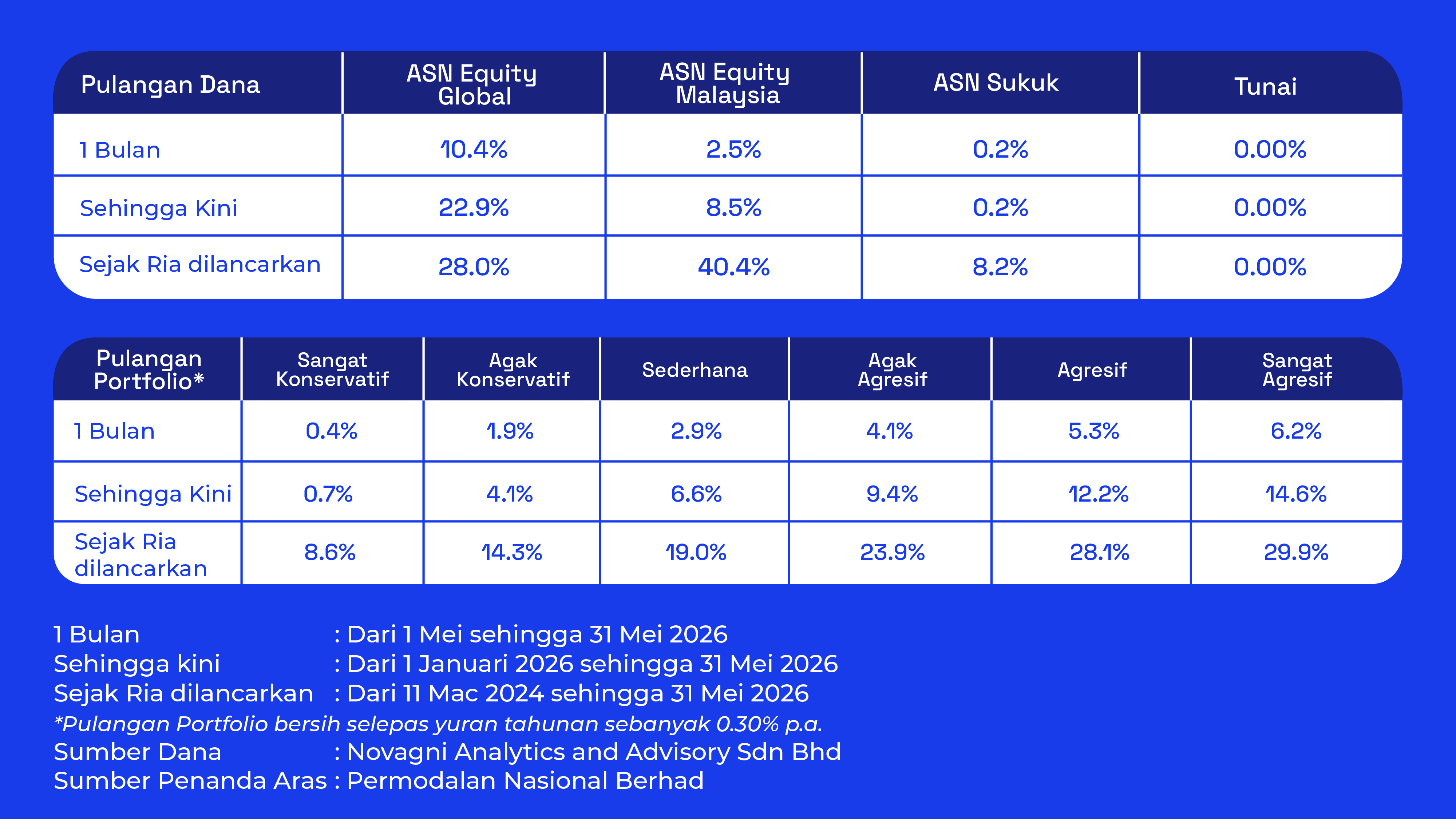
Among the underlying funds, ASN Equity Global remained the strongest performer, recording a 10.4% return for the month. This reflected the continued rally in major global equity markets during May. Meanwhile, ASN Equity Malaysia posted a positive return of 2.5%, supported by improving domestic market sentiment. ASN Sukuk delivered a stable return of 0.2%, providing consistent income and stability to the portfolios.
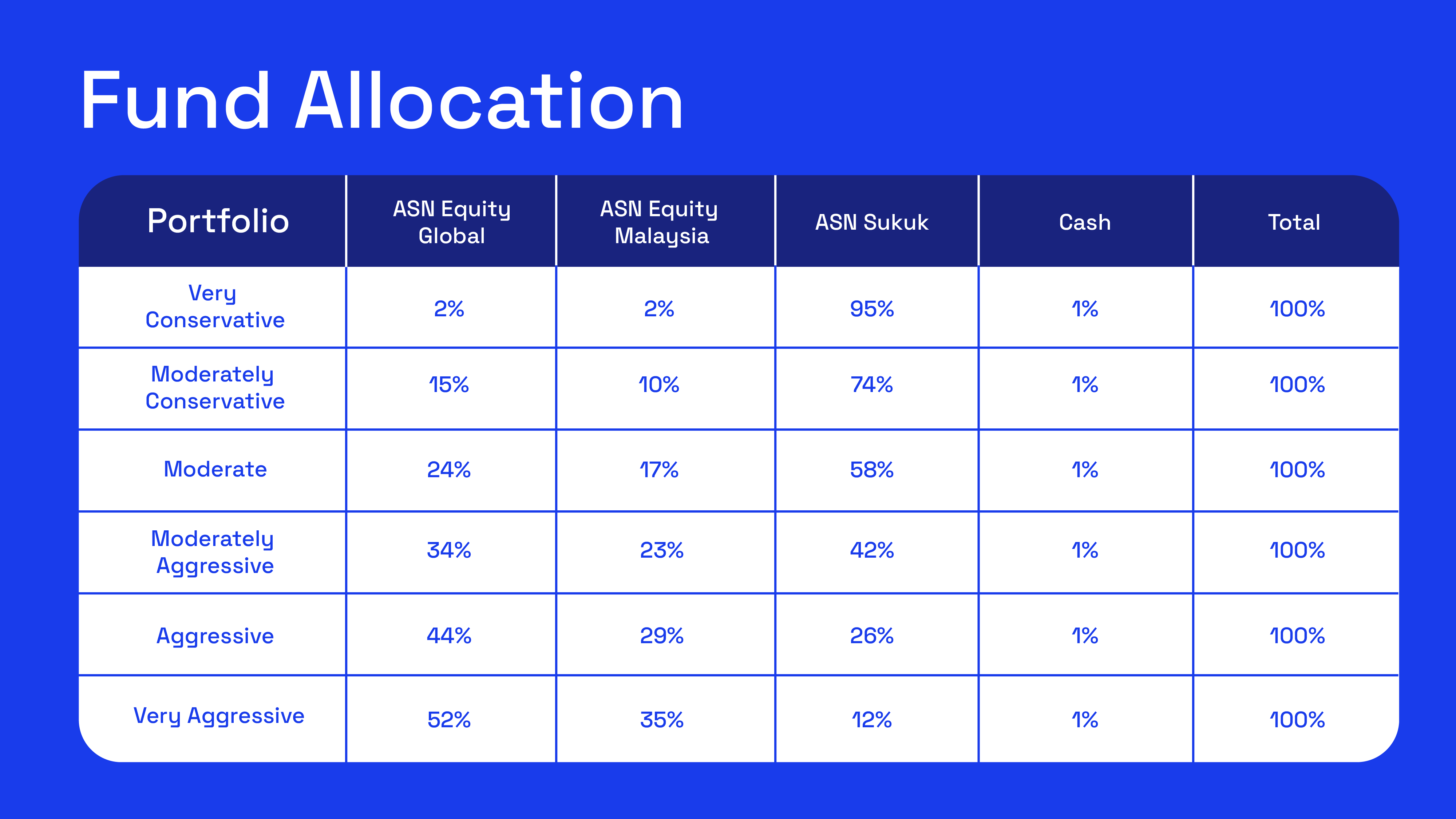
As a result, the Very Aggressive Portfolio generated the highest monthly return of 6.2%, followed by the Aggressive Portfolio at 5.3% and the Moderately Aggressive Portfolio at 4.1%. The Moderate, Moderately Conservative, and Very Conservative portfolios recorded returns of 2.9%, 1.9%, and 0.4%, respectively, reflecting their progressively higher allocations to sukuk and cash.
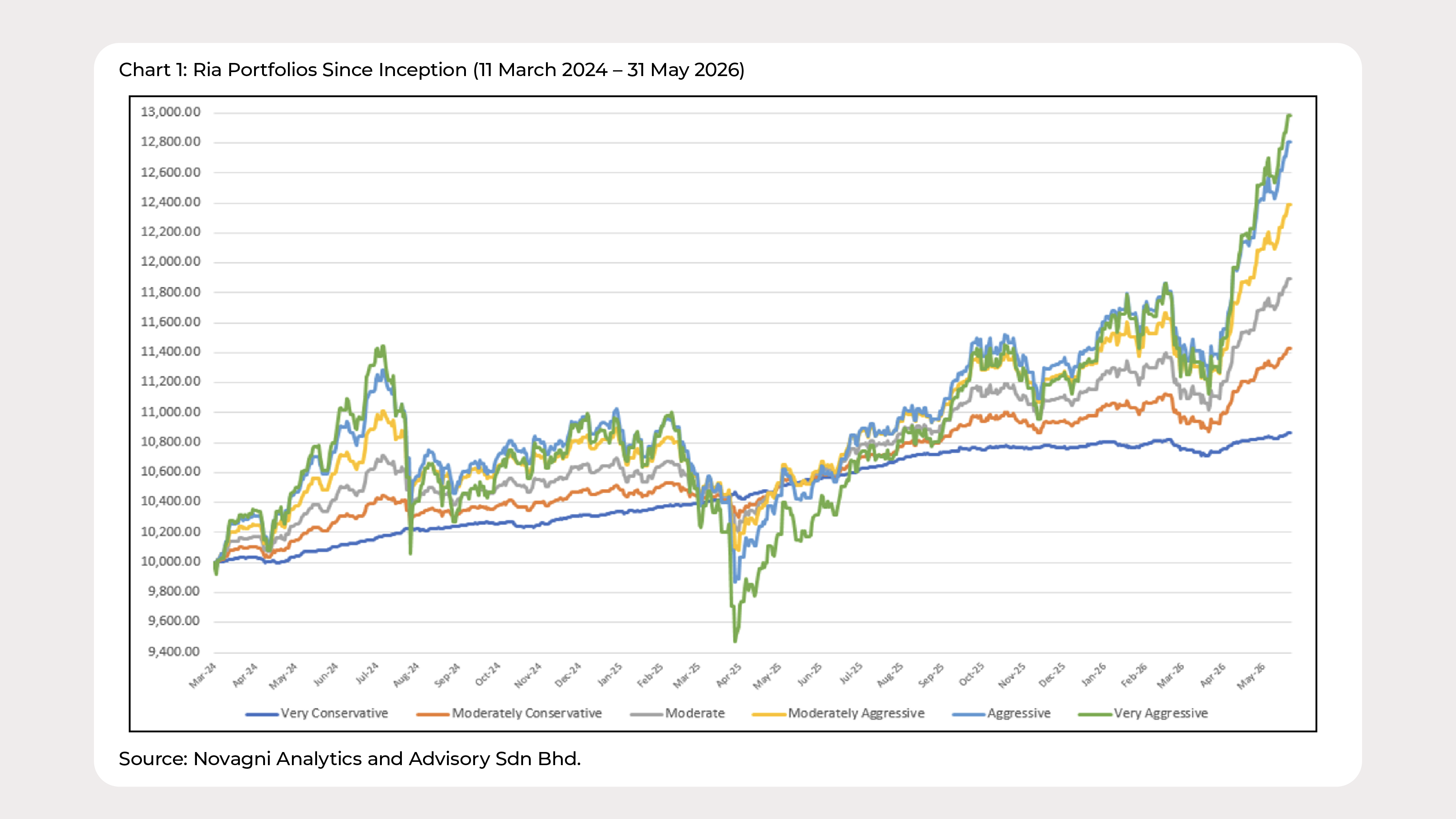
On a year-to-date basis, all portfolios remained in positive territory. The Very Aggressive Portfolio led with a return of 14.6%, while the Aggressive Portfolio gained 12.2%. Since Ria's launch, the portfolios have continued to generate positive cumulative returns, with the Very Aggressive Portfolio delivering 29.9%, demonstrating the long-term benefits of staying invested across different market conditions.
Market Commentary – May 2026
EQUITY MARKET
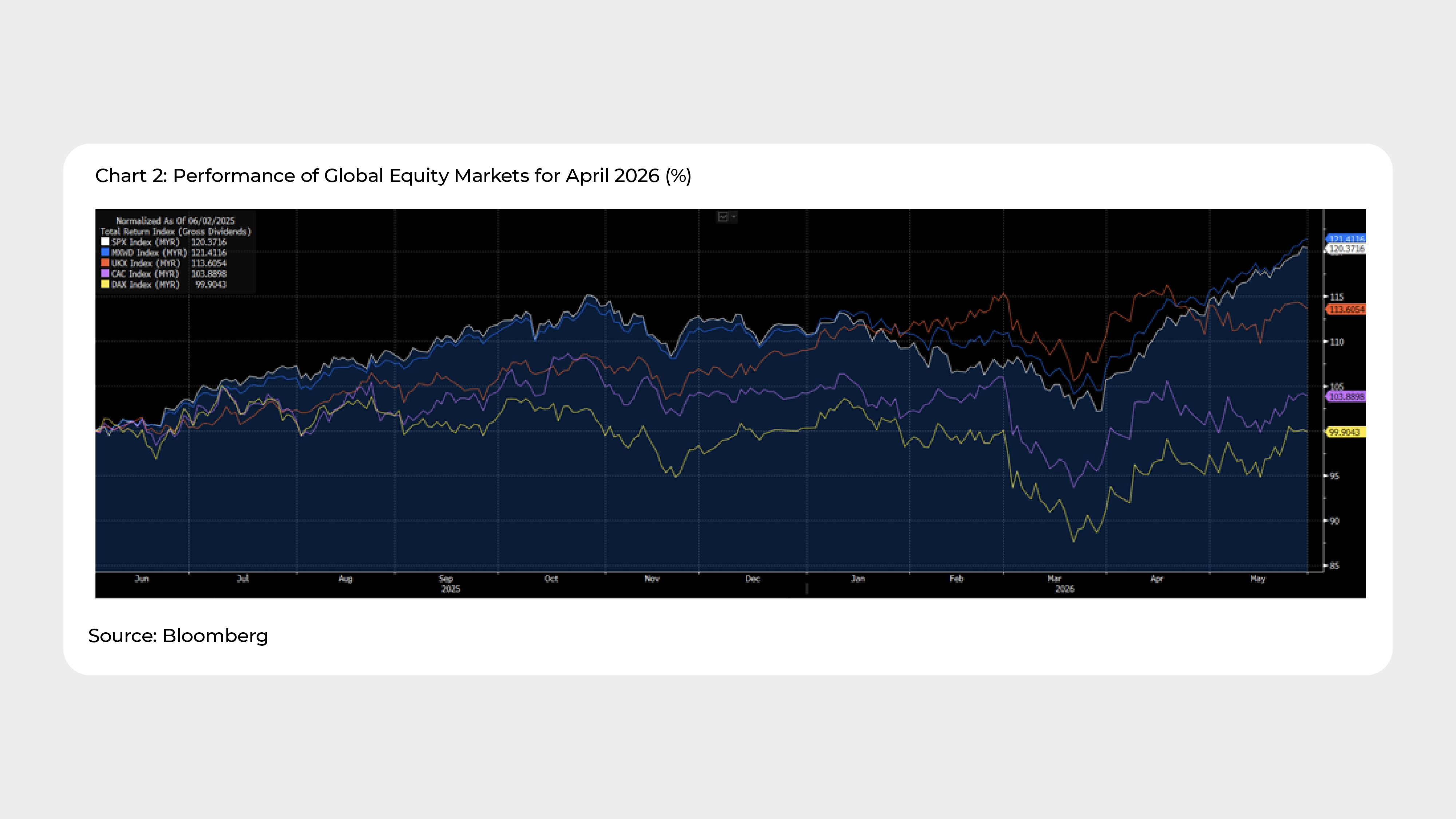
May 2026 saw global equity markets extend their gains as investor confidence remained resilient. US equities continued their upward momentum, with the S&P 500 (SPX) rising 5.06% in MYR terms. Global equities also advanced, as the MSCI World Index (MXWD) gained 5.01% in MYR terms, supported by positive corporate earnings, easing trade tensions, and expectations that major central banks would maintain a supportive policy stance. European markets delivered mixed results. Germany's DAX Index rose 2.67%, while France's CAC 40 gained 1.70% in MYR terms, supported by improving investor confidence. In contrast, the UK's FTSE 100 (UKX) edged down 0.30%, as weaker performance in selected sectors weighed on the broader market.
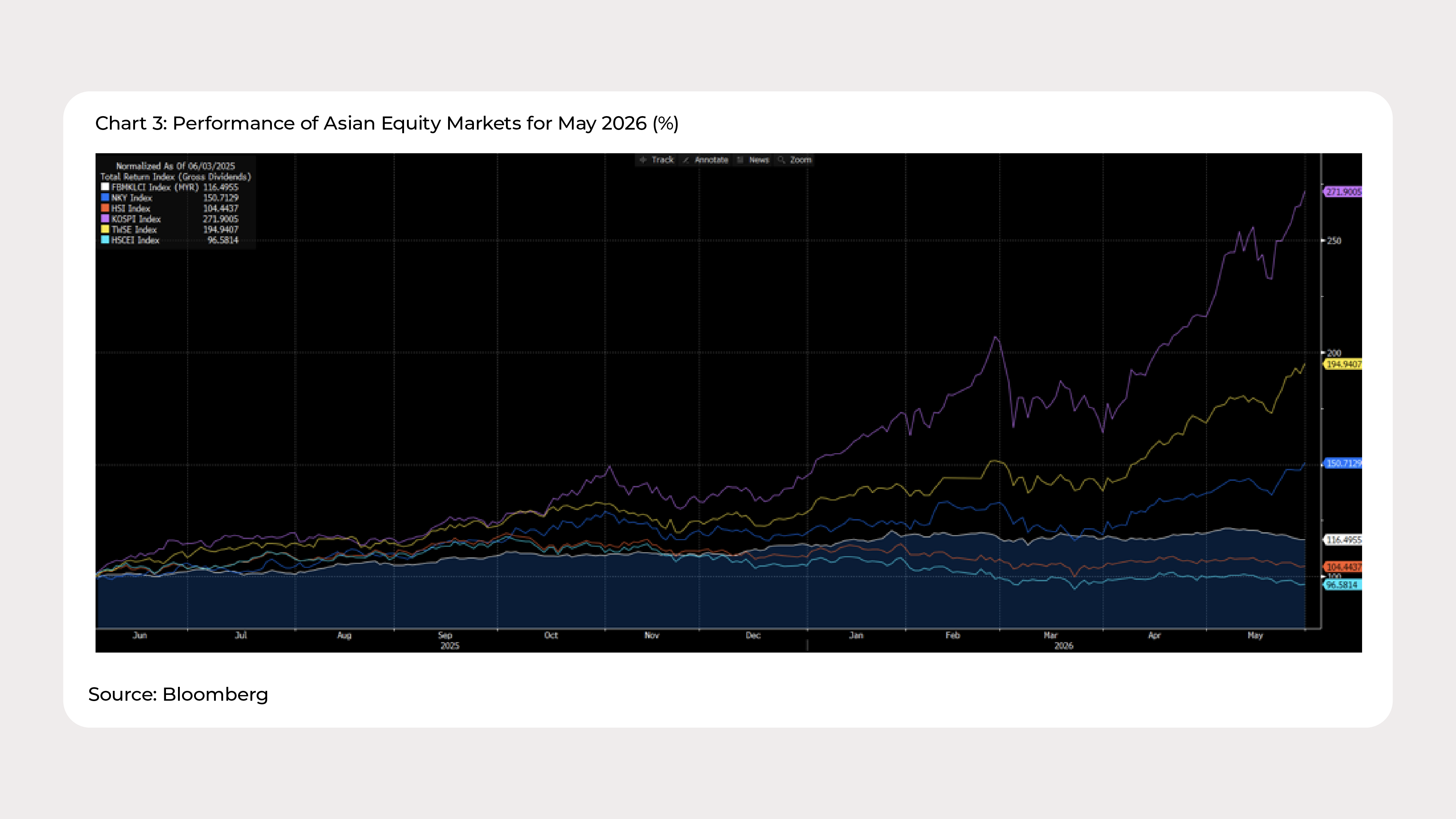
Asian equity markets delivered mixed performance in May 2026 as investor sentiment varied across the region amid differing economic conditions and market drivers. Japan's Nikkei (NKY) was the strongest performer, surging 9.83% in MYR terms, supported by robust corporate earnings and continued strength in export-oriented companies. North Asian markets also recorded strong gains during the month. South Korea's KOSPI Index climbed 25.97%, while Taiwan's TWSE Index advanced 15.81%, driven by continued optimism surrounding the technology sector and resilient demand for artificial intelligence (AI)-related companies. In contrast, Greater China markets remained under pressure. Hong Kong's Hang Seng Index (HSI) declined 1.97%, while the Hang Seng China Enterprises Index (HSCEI) fell 2.80%, reflecting cautious investor sentiment towards Chinese equities. Meanwhile, Malaysia's FBMKLCI slipped 2.18%, weighed down by weakness in selected heavyweight stocks despite resilient domestic economic fundamentals.
MALAYSIA BOND MARKET
Global bond markets remained cautious in May 2026 as the US Federal Reserve (Fed) maintained the Federal Funds Rate at 3.50%–3.75%, reinforcing expectations that interest rates would remain elevated for longer. As a result, the 10-year US Treasury (UST) yield stayed high, closing the month at 4.45%, as investors continued to assess the timing of potential policy easing.
In Malaysia, Bank Negara Malaysia (BNM) kept the Overnight Policy Rate (OPR) unchanged at 2.75%, supported by stable domestic economic conditions and manageable inflation. Against this backdrop, Malaysia's bond market recorded a net foreign outflow of RM4.26 billion, reversing the inflows seen in April. The outflow was mainly driven by foreign selling of Malaysian Government Securities (MGS) and Government Investment Issues (GII), which recorded a combined net outflow of RM7.0 billion. Meanwhile, corporate bonds and sukuk continued to attract investor interest, registering a net inflow of RM2.4 billion during the month.
The 10-year MGS yield closed at 3.573%, resulting in a yield differential of 87 basis points against the 10-year UST. Despite the outflows from government securities, continued inflows into Malaysia's corporate bond and sukuk market suggested that investors remained selective, favouring higher-yielding corporate credit while adopting a more cautious stance towards government bonds.
COMMODITY MARKET
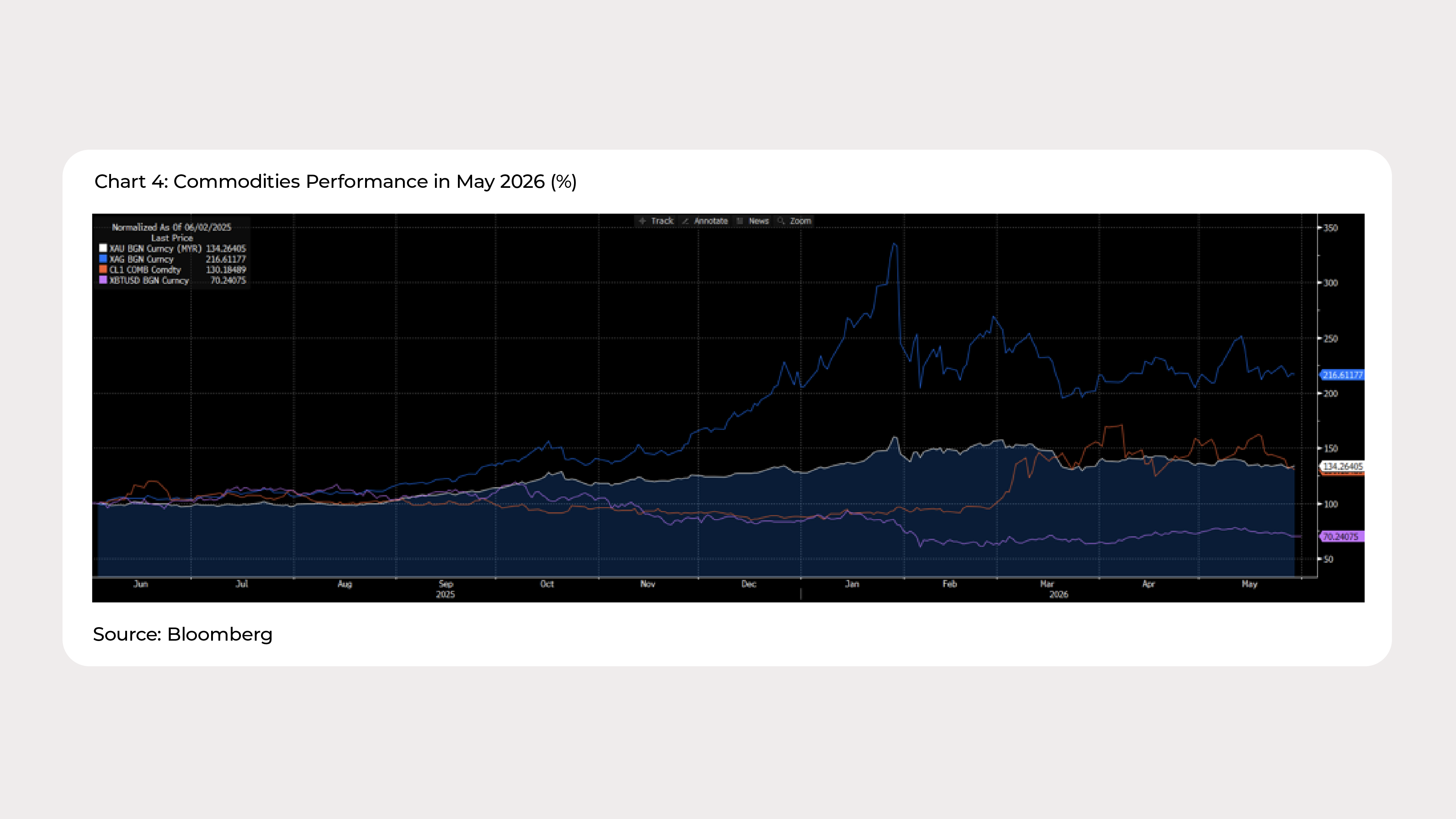
Commodity markets recorded mixed performance in May 2026 as investors reassessed the outlook for global growth and energy demand. Gold declined 1.68% in MYR terms as improving risk appetite reduced demand for safe-haven assets. Crude oil fell sharply by 17.01%, despite heightened volatility in global energy markets. Ongoing geopolitical tensions in the Middle East, including the closure of the Strait of Hormuz and the US naval blockade on Iran, disrupted global oil supplies and pushed OPEC+ crude oil production to multi-decade lows. However, investors continued to reassess the outlook for global oil supply and demand, resulting in significant price volatility throughout the month. In contrast, silver gained 2.1% in MYR terms, supported by its dual role as both a precious and industrial metal amid expectations of continued economic activity. Meanwhile, Bitcoin declined 4.0%, giving back part of the strong gains recorded in April as investors locked in profits and market enthusiasm for risk assets eased.
SUMMARY
May 2026 saw global financial markets extend their positive momentum as investor sentiment remained resilient despite continued uncertainty surrounding global economic conditions and monetary policy expectations. Strong performances across major global equity markets, particularly in the US, together with robust gains in North Asian markets such as Japan, South Korea and Taiwan, supported overall market sentiment. Meanwhile, equity markets across Greater China and Malaysia recorded weaker performances, highlighting the varying impact of domestic economic conditions, investor sentiment and sector exposures across the region.
Meanwhile, Malaysia's bond market recorded a net foreign outflow during the month, largely driven by foreign selling of government bonds amid a cautious global interest rate environment. Nevertheless, continued inflows into corporate bonds and sukuk reflected sustained investor confidence in Malaysia's corporate credit market, while domestic bond yields remained relatively stable.
Commodity markets also delivered mixed performance. Gold and crude oil declined during the month, while silver posted modest gains. Crude oil remained highly volatile amid ongoing geopolitical tensions in the Middle East and uncertainty surrounding global oil supply and demand, while Bitcoin gave back part of its gains from the previous month as investors took profits following April's strong rally.
Overall, market developments in May reinforced the importance of maintaining a diversified investment portfolio across asset classes and regions. As financial markets continue to respond to evolving economic conditions, monetary policy expectations and geopolitical developments, maintaining a disciplined long-term investment approach remains key to navigating periods of market uncertainty.
RIA Reminder – Stay Focused on Your Long-Term Goals
May 2026 saw global financial markets build on the positive momentum established in April. While global equity markets continued to perform well, performances across regions and asset classes remained mixed as investors responded to evolving economic conditions, monetary policy expectations, and geopolitical developments. The varying performance across markets highlights the importance of maintaining a diversified portfolio to help navigate changing investment environments.
Ria portfolios continued to benefit from diversification across different asset classes and regions. Portfolios with higher allocations to global equities captured more of the market's upside, while more conservative portfolios provided greater stability through their exposure to sukuk and cash. This balanced approach helps investors remain invested across different market cycles while staying focused on their long-term financial goals.
One simple way to stay consistent with your investment journey is through Auto Labur. Once activated, your investments are made automatically at regular intervals, regardless of whether markets are rising, falling, or moving sideways. By investing consistently over time, you can build long-term investing discipline without the need to worry about short-term market movements or trying to time the market.
Take a moment to log in to Ria and review how your portfolio performed in May. It may also be a good opportunity to review your Auto Labur amount and ensure it remains aligned with your financial goals and risk tolerance. Staying invested consistently over the long term remains an important step towards achieving your financial objectives.