
Ria September 2026 Portfolio Performance Review

Ria portfolios delivered mixed performance in September 2026 as global markets navigated higher U.S. Treasury yields, a stronger U.S. Dollar, and expectations of interest rates remaining elevated for longer. While these conditions weighed on fixed income markets, global equities continued to demonstrate resilience, supporting the performance of portfolios with higher equity exposure.
-1.png)
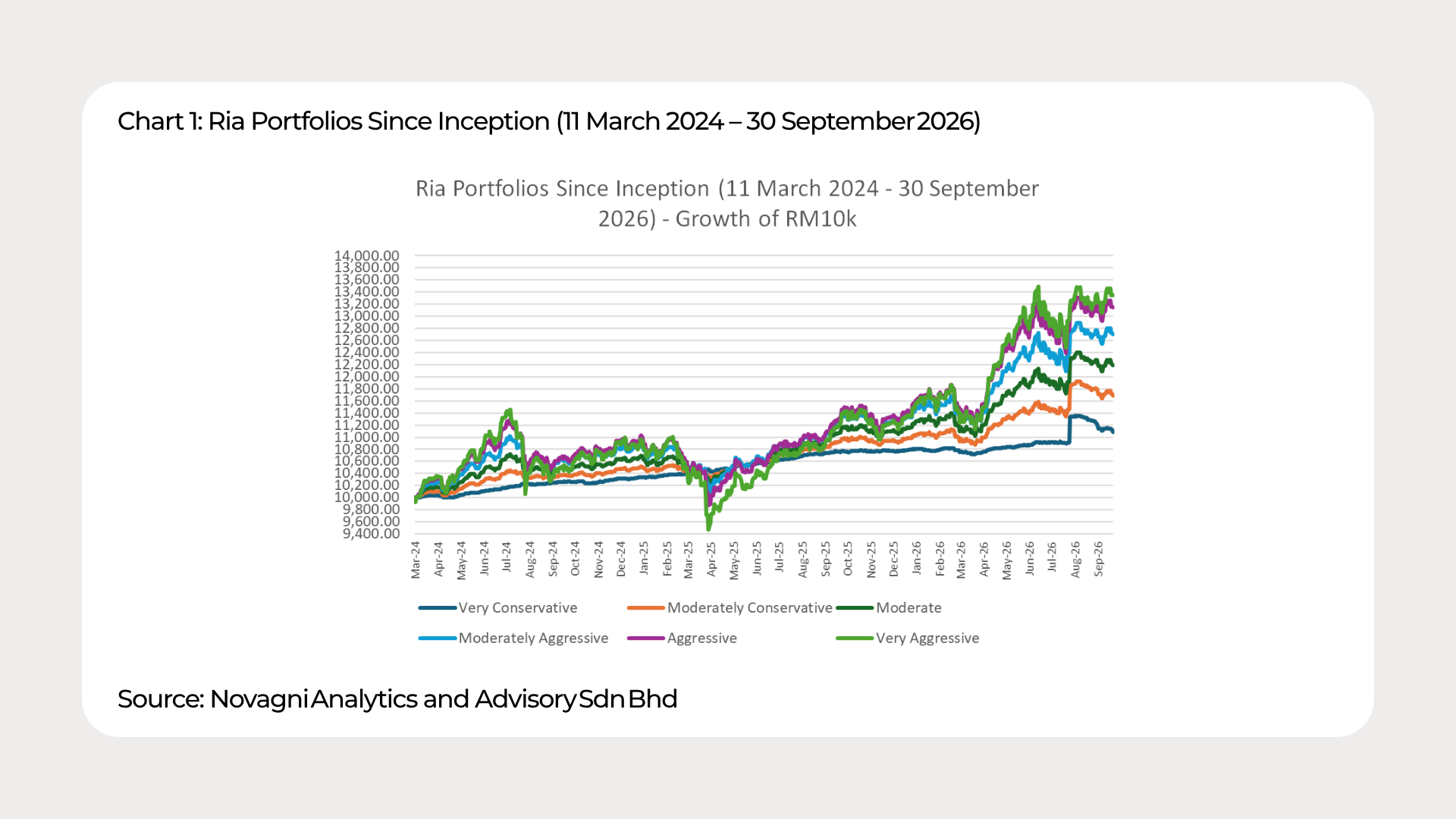
Over the 1-month period, the Very Aggressive Portfolio led performance with a return of 0.92%, followed by the Aggressive Portfolio (+0.54%) and Moderately Aggressive Portfolio (+0.07%). The Moderate Portfolio recorded a more modest decline of -0.40%, reflecting its balanced allocation between growth and defensive assets. More conservative portfolios experienced larger declines, primarily due to weakness in the sukuk and fixed income markets.
On a year-to-date basis, performance remained positive across portfolios from the Moderate Portfolio onwards. The Very Aggressive Portfolio continued to outperform with a return of 17.16%, followed by the Aggressive Portfolio (14.04%), Moderately Aggressive Portfolio (10.49%), and Moderate Portfolio (7.01%). These results highlight the continued support from global equity markets despite periods of market volatility during the year.
Since inception, all portfolios have remained firmly positive. The Moderate Portfolio generated a cumulative return of 19.37%, demonstrating the benefits of a balanced investment approach, while the Very Aggressive Portfolio delivered the strongest return at 32.82%. The positive long-term performance across portfolios underscores the value of diversification and maintaining a disciplined investment strategy through varying market conditions.
Market Review
Summary
September 2026 was marked by a significant shift in market expectations as investors adjusted to a renewed tightening cycle by the Federal Reserve and rising geopolitical risks in the Middle East. Strong U.S. economic data, resilient labour market conditions and higher oil prices reinforced concerns that inflation could remain elevated for longer, prompting markets to price in a higher-for-longer interest rate environment.
The Fed's decision to raise interest rates by 25 basis points during the month led to a sharp rise in global bond yields and a stronger U.S. Dollar. At the same time, escalating tensions involving Iran and uncertainty surrounding oil supply routes through the Strait of Hormuz pushed crude oil prices significantly higher, creating fresh inflationary pressures across global markets.
Despite these headwinds, equity markets remained relatively resilient, supported by continued optimism surrounding artificial intelligence (AI) and strong corporate earnings expectations.
Equity Market
Global equity markets delivered mixed but generally positive returns in September, demonstrating resilience despite higher interest rates and rising bond yields.
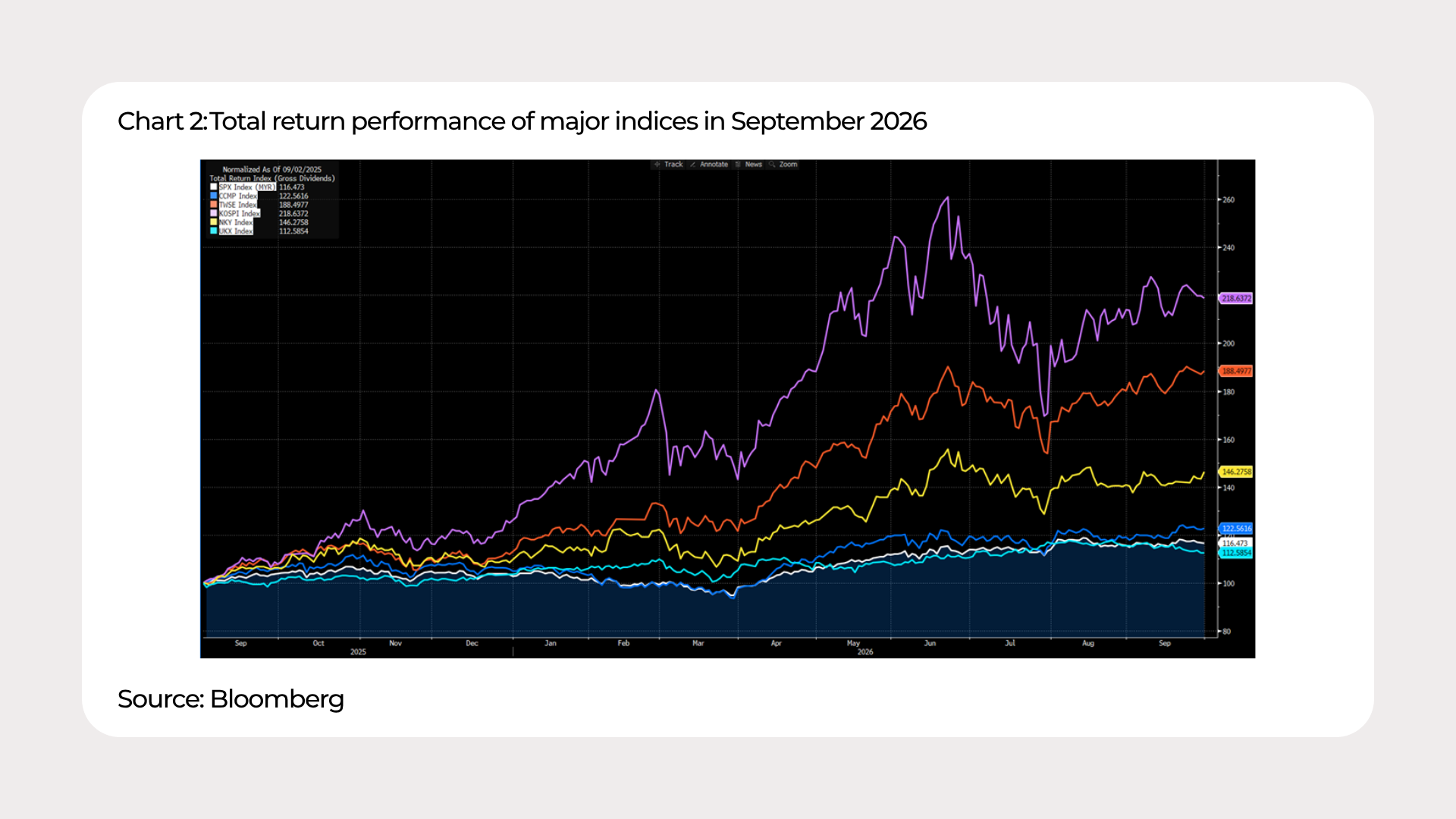
The strongest-performing markets were Taiwan (+4.66%), Japan (+3.92%) and the U.S. technology-heavy NASDAQ (+3.06%). The outperformance of these markets reflected continued investor confidence in the AI investment theme, with semiconductor manufacturers, technology exporters and cloud infrastructure providers benefiting from sustained demand for AI-related products and services.
The U.S. remained the key driver of global equity performance. While the broader S&P 500 rose a modest 0.77%, technology-focused companies continued to outperform as investors concentrated on sectors with strong earnings growth and long-term structural potential. This trend also benefited Asian technology exporters, particularly in Taiwan, South Korea and Japan, which form an important part of the global semiconductor supply chain.
In contrast, the UK FTSE declined 2.62% as higher bond yields and slowing growth expectations weighed on more traditional value-oriented sectors.
Fixed Income Market
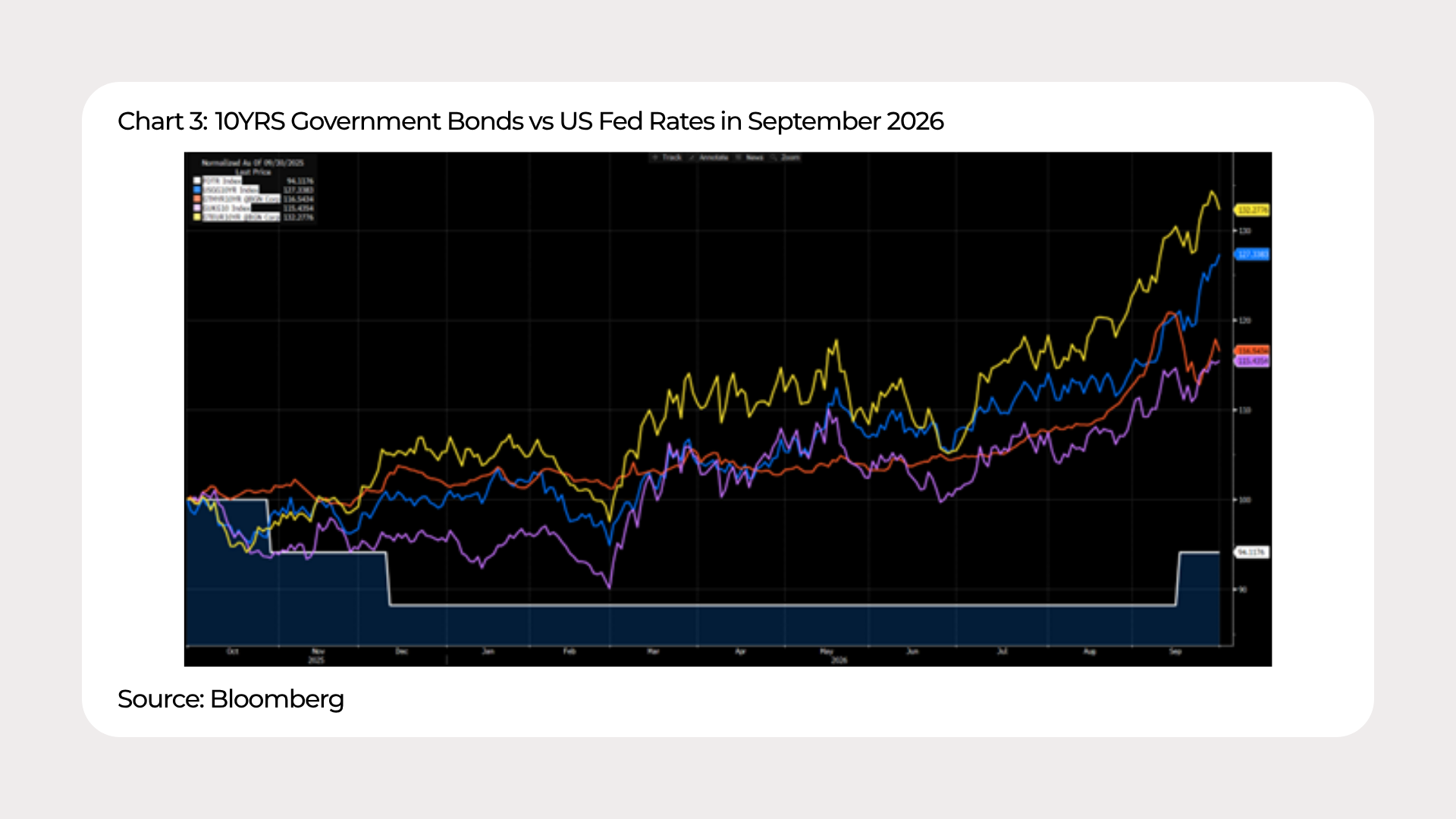
September saw a substantial repricing in global bond markets following the Federal Reserve's decision to raise interest rates to 3.75%-4.00%. The move reflected policymakers' concerns that inflation risks remain elevated, particularly amid rising energy prices and persistent economic strength.
The impact on bond markets was significant.
The U.S. 10-Year Treasury yield rose from 4.75% to 5.28%, representing an increase of 53 basis points (bps) during the month. This marked one of the sharpest monthly moves seen this year and reflected investor expectations that U.S. interest rates may remain elevated for longer. Similar upward pressure was observed across developed markets, with UK and Eurozone government bond yields also rising.
In Malaysia, the 10-Year Malaysian Government Securities (MGS) yield increased from 3.86% to 4.02%, reflecting spillover effects from global bond markets. While the magnitude of the increase was smaller than in the U.S., Malaysian bonds were nonetheless affected by higher global yields and cautious investor sentiment.
Money market instruments benefited from this environment as investors continued to favour higher-yielding, lower-risk investments while waiting for greater clarity on future monetary policy direction.
Commodities & Currency Markets
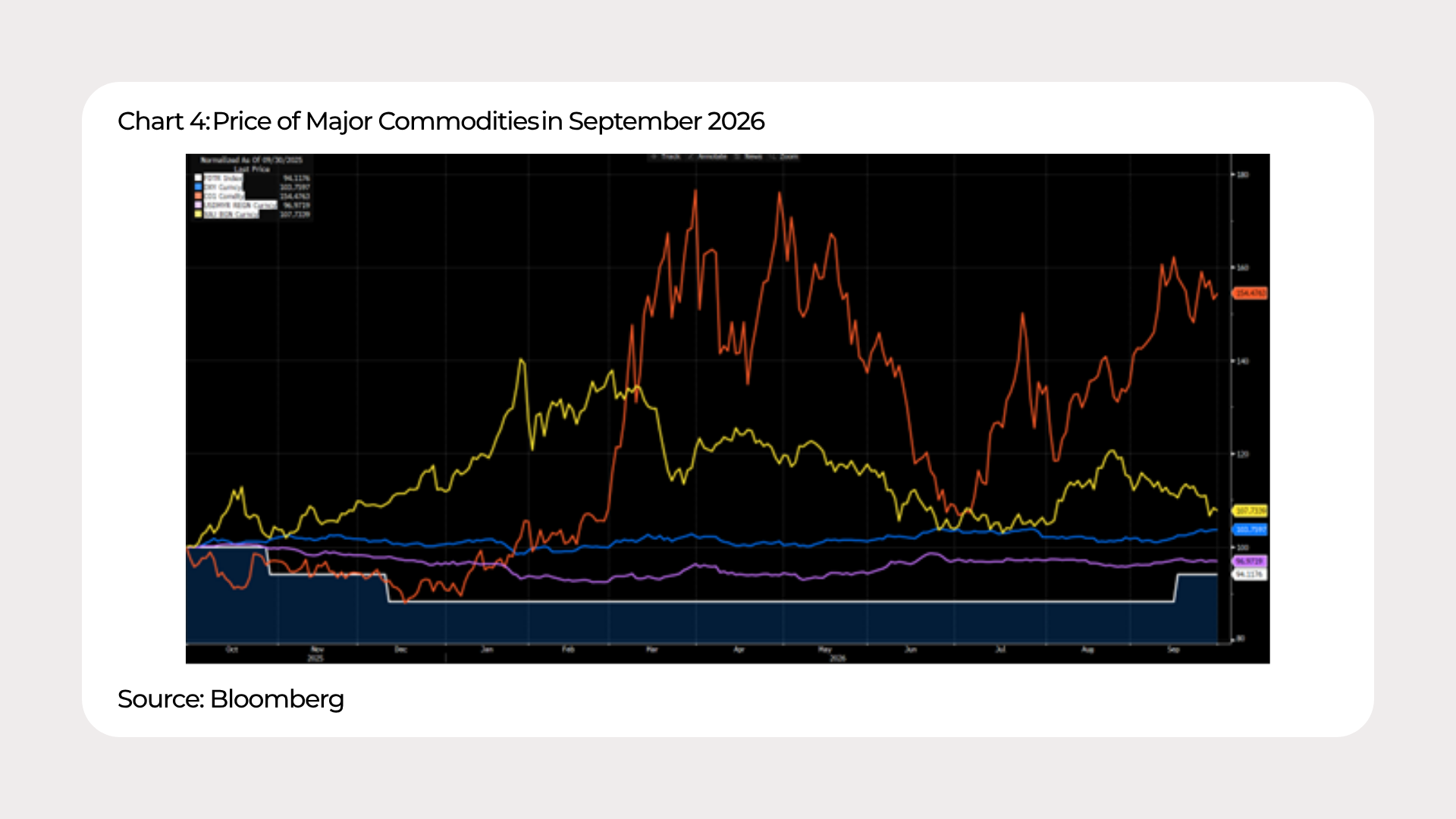
The U.S. Dollar was one of the strongest-performing asset classes during September. Following the Fed's rate hike and sharp increase in Treasury yields, the U.S. Dollar Index (DXY) rose 2.03% to 101.45. Higher U.S. yields increased the attractiveness of dollar-denominated assets, leading to renewed demand for the greenback.
As a result, many emerging market currencies weakened against the U.S. Dollar, including the Malaysian Ringgit. The USD/MYR exchange rate rose from 4.0247 to 4.0798, indicating a 1.37% depreciation in the Ringgit during the month.
While rising oil prices typically provide support to Malaysia as a commodity exporter, the strength of the U.S. Dollar and widening interest rate differential ultimately exerted greater influence on currency markets during September.
Oil emerged as one of the best-performing asset classes during the month, with prices rising 14.41% from USD 90.49 to USD 103.53 per barrel.
The rally was driven primarily by ongoing geopolitical tensions involving the United States and Iran, as well as concerns surrounding the security of oil shipments through the Strait of Hormuz. Given that a significant portion of global oil supply passes through this strategic waterway, any disruption raises concerns about potential supply shortages and higher energy costs.
The sharp rise in oil prices renewed concerns that inflation may remain elevated, complicating central banks' efforts to bring price pressures back towards target levels. In contrast, gold declined 6.31% during the month, falling from USD 4,437.38 to USD 4,157.41 per ounce.
Despite ongoing geopolitical uncertainty, gold was negatively impacted by higher U.S. interest rates, rising Treasury yields and a stronger U.S. Dollar. As gold does not generate income, investors increasingly favoured bonds and money market instruments offering attractive yields.
The performance of gold during September highlights the dominant influence of monetary policy expectations over traditional safe-haven demand. While geopolitical risks provided some support, they were insufficient to offset the pressure from higher real yields and a stronger dollar.
What It Means for Malaysia?
For Malaysia, September's market environment presented both opportunities and challenges.
Higher oil prices may provide support to government revenue, export earnings and selected energy-related sectors. However, higher energy prices also contribute to inflation risks globally, potentially delaying monetary easing by major central banks.
The stronger U.S. Dollar resulted in a weaker Ringgit, while higher U.S. Treasury yields contributed to upward pressure on Malaysian bond yields. Nonetheless, Malaysia's bond market remained relatively stable compared to developed markets, reflecting resilient domestic fundamentals.
From an investment perspective, higher fixed income yields have improved opportunities in money market and bond investments, while continued strength in AI-related sectors supports long-term equity allocations.
Market Outlook
Looking ahead, three key themes are likely to drive markets in the final quarter of 2026.
First, investors will closely monitor whether inflation begins to moderate following the recent spike in oil prices. Persistently high energy prices could lead to additional policy tightening and maintain upward pressure on bond yields.
Second, the AI investment theme remains intact. The strong performance of Taiwan, Japan and the NASDAQ during September suggests investors continue to favour companies exposed to semiconductors, cloud computing and AI infrastructure despite a challenging rate environment.
Third, geopolitical developments in the Middle East remain critical. Any de-escalation between the U.S. and Iran could ease pressure on oil prices and inflation expectations, while further tensions could prolong market volatility.
Ria Reminder: Is Your Portfolio Ready for What's Next?
Markets may continue to experience periods of short-term volatility as investors navigate higher interest rates, a stronger U.S. Dollar and ongoing geopolitical developments. However, beneath the market noise, long-term opportunities remain supported by resilient economic growth, continued innovation and the rapid adoption of artificial intelligence (AI), which continues to drive growth across global equity markets.
At the same time, higher interest rates have created attractive opportunities in money market and fixed income investments, while gold continues to play an important role as a portfolio diversifier amid uncertainty. With opportunities emerging across different asset classes, maintaining a well-balanced portfolio remains as important as ever.
Is Your Portfolio Positioned for Today's Market?
As market conditions evolve, now may be a good time to revisit whether your portfolio remains aligned with your financial goals, investment horizon and risk tolerance. Rather than taking a one-size-fits-all approach, investors can consider adjusting their portfolio allocation to better reflect their market outlook and investment preferences.
Take Control with Custom Portfolio
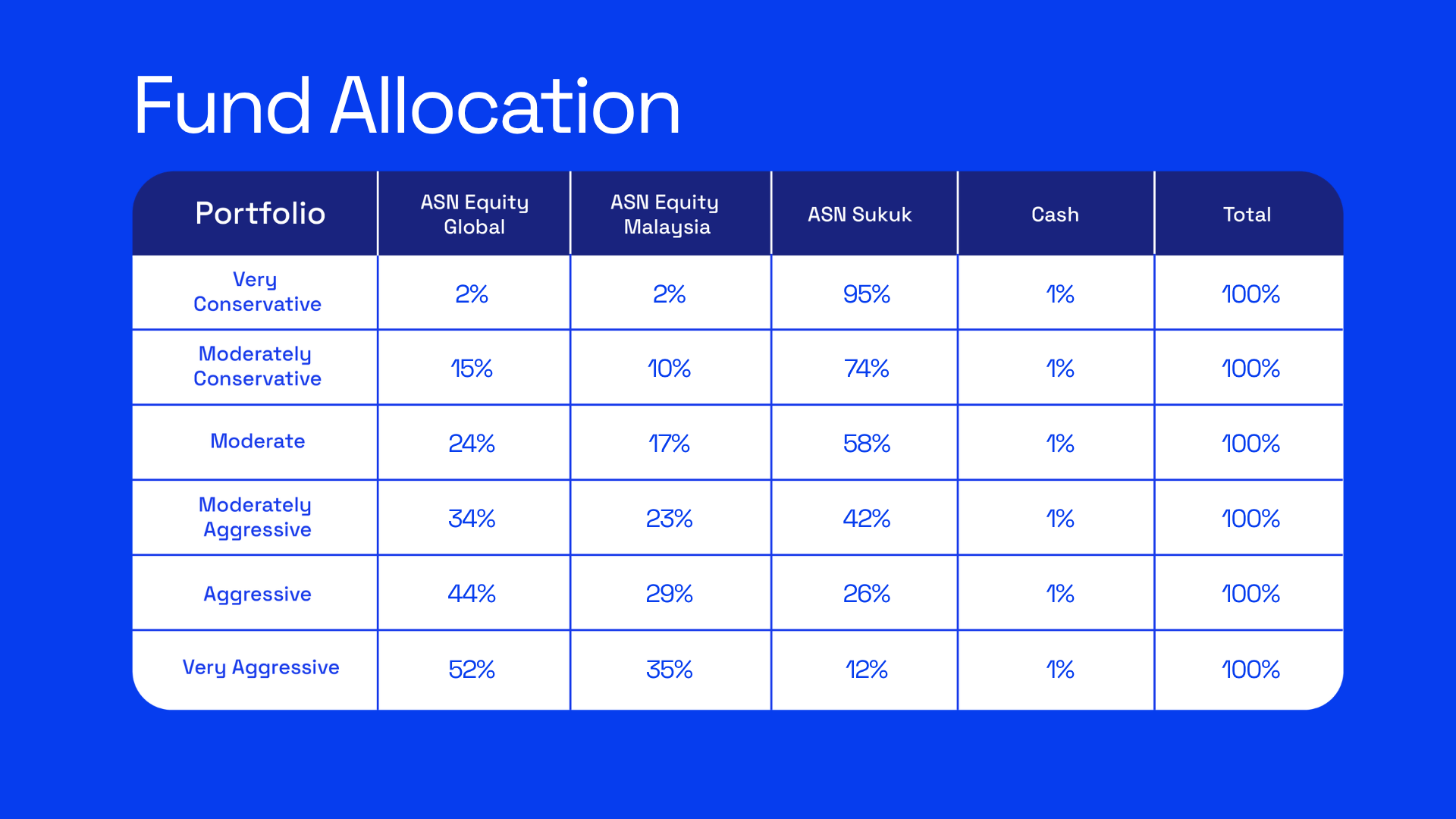
With Ria's Custom Portfolio feature, you can tailor your portfolio allocation across ASN Equity Global, ASN Equity Malaysia, ASN Sukuk and Cash to suit your investment objectives.
Whether you want to:
- Capture growth opportunities through global equities and AI-driven themes
- Increase exposure to sukuk and fixed income to benefit from higher yields
- Hold a higher cash allocation during periods of market uncertainty
Custom Portfolio gives you the flexibility to build a portfolio that matches your investment strategy while remaining invested for the long term.
How to Create Your Custom Portfolio in Ria
- Log in to the myASNB app.
- Navigate to Ria and select Create New Portfolio.
- Select Custom.
- Adjust your preferred allocation across ASN Equity Global, ASN Equity Malaysia, ASN Sukuk and Cash.
- Review your customised portfolio and projected risk profile.
- Confirm your allocation and start investing according to your preferences.
Don't Just Watch the Market. Position for It.
Successful investing is not about reacting to every market movement. It's about ensuring your portfolio is positioned to capture opportunities while staying aligned with your long-term goals.
Log in to Ria today, review your portfolio and explore Custom Portfolio to create an investment strategy that works for you.