ASNB Manages Zakat for Investors

Paying zakat is an annual obligation for Muslims who meet the required conditions.
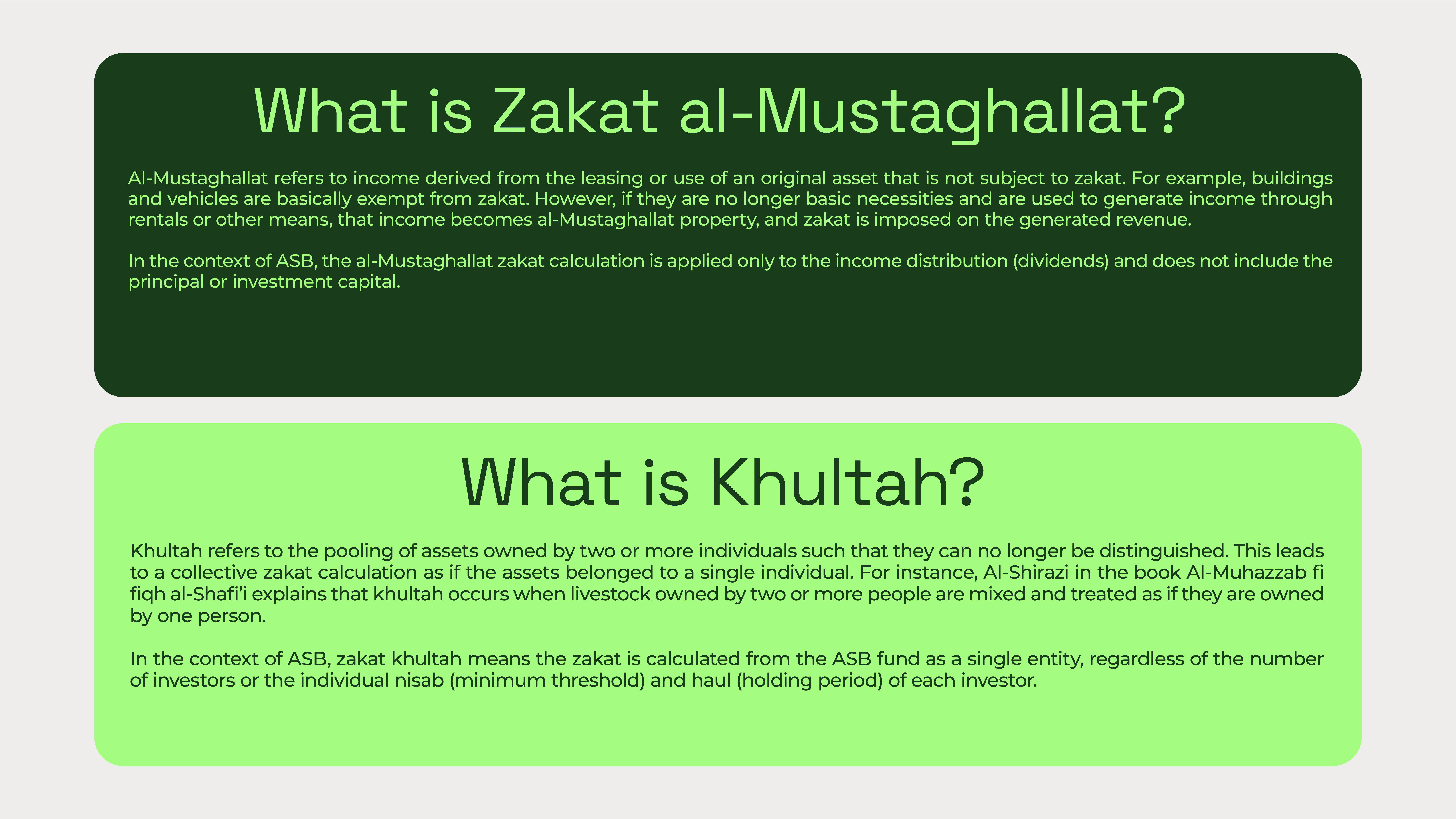
Understanding this, ASNB, the country’s largest unit trust manager, has introduced a convenient solution through automatic zakat payment using the al‑Mustaghallat collective method (khultah).
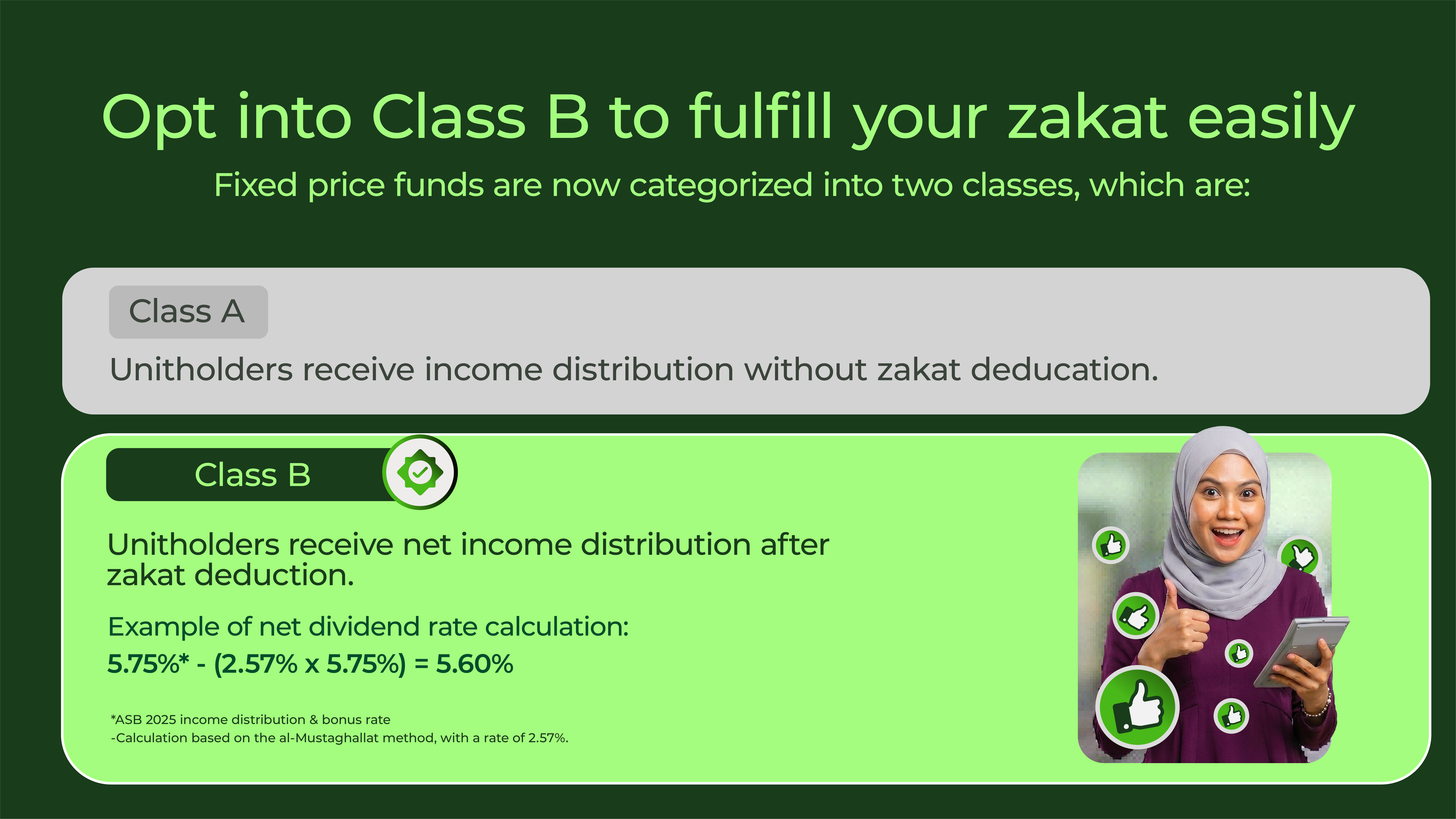
With this method, investors not only fulfil their zakat obligation more easily, but will also receive net dividends if they choose to opt-in.
This approach gives investors peace of mind, as zakat is managed consistently and systematically every year, without the worry of forgetting or having to calculate it themselves.
At the same time, investors can continue focusing on long-term investing, since zakat is calculated based on income distribution and bonuses, not on the investment principal.
Under the al‑Mustaghallat method, the zakat threshold (nisab) is assessed collectively, based on the total accumulated dividends of all participating investors.
For zakat timing (haul), there is no need to wait for a full year. Zakat can be paid as soon as the income is received, in line with the views of some Islamic scholars.
However, this facility is only applicable to investors who opt for Class B units, as the ruling from the fatwa authorities specifically allows implementation under the khultah method.
For Class A investors, zakat must still be calculated and paid individually, based on current rulings, either using the minimum balance or the closing balance.
Income Tax Planning
Interestingly, although ASNB manages investors' zakat payments, investors are still able to claim tax rebates using the official receipts issued by the respective State Zakat Centres.
As a result, ASNB investors can not only maintain competitive net investment returns, but also manage their income tax obligations more effectively.
For example, let us look at the zakat payment method for ASB. Zakat payments will be carried out automatically on the same day income distributions are credited into investors' accounts, which is 1 January each year.
Therefore, for investments relating to the 2026 financial year, zakat will be deducted on 1 January 2027 and remitted to the State Zakat Centre (PZN) within five (5) working days.
As the zakat payment is completed in 2027, it will be recognised as a zakat payment for the Year of Assessment 2027. Consequently, the tax rebate can only be claimed for the Year of Assessment 2027, which is filed in 2028.
Zakat payments will be made to the State Zakat Centres (PZN) throughout Malaysia according to the address registered by the unit holder in the ASNB system.
However, at present, only the Federal Territories State Zakat Centre (PPZ-MAIWP) has fulfilled the required technical and system requirements.
Zakat Calculation
The zakat rate is set at 2.57% for all ASNB Fixed Price Funds, namely ASB, ASB 2, ASB 3 Didik, ASM, ASM 2 Wawasan and ASM 3, in line with the Gregorian calendar approach and international zakat accounting standards.
Zakat will only be imposed on income distributions that can be withdrawn by unit holders, such as cash investments and ASB Financing investments.
The implementation of the al-Mustaghallat zakat method takes into account religious rulings obtained through meetings of the Muzakarah Committee of the National Council for Islamic Religious Affairs Malaysia (MKI), as well as approvals from State Fatwa Committees, including those of the Federal Territories, Pahang, Penang, Kelantan, Kedah, Melaka, Perak, Sabah, Terengganu and Selangor, which recognise the use of the collective al-Mustaghallat (Khultah) zakat calculation method for ASNB Fixed Price Funds.
Read the State Fatwa approvals here.

Participation in Class B can be made through the following platforms:
• ASNB branches
• ASNB agents
• myASNB application and portal
• ASNB kiosks
If you would like a simpler and more consistent way to manage your zakat, consider joining Class B today.
For more information, visit ASNB's official website here for further details.